Best Off-Grid Power Stations for Camping & Campervans
7 real, currently-selling models — simple picks for who each one actually suits.
Affiliate disclosure — we earn a small commission on purchases made through our links, at no extra cost to you. Details
Last checked and updated: September 2026
A quick honesty note: we personally own and use the Jackery Explorer 1000 v2 — the other six are included on real specs, current pricing, and verified buyer feedback rather than our own hands-on time. We'll add first-hand notes as we test more of them.
Best Overall: Jackery Explorer 1000 v2 · Best-Selling: Anker SOLIX C1000 Gen 2 · Highest Output: DJI Power 1000 · Fastest Charging: EcoFlow Delta 3 Classic · Best Lightweight: Jackery Explorer 500 v2 · Most Portable: Anker SOLIX C300 · Best Budget: EcoFlow RIVER 3
Pairing a power station with a 12V cooler or fridge? See our Camping Essentials picks — including the YETI Roadie 24 and Coleman Xtreme range — for what to run off it.
Quick Comparison — 7 Power Stations
2026 Models, UK Availability| Product | Capacity | Weight | |
|---|---|---|---|
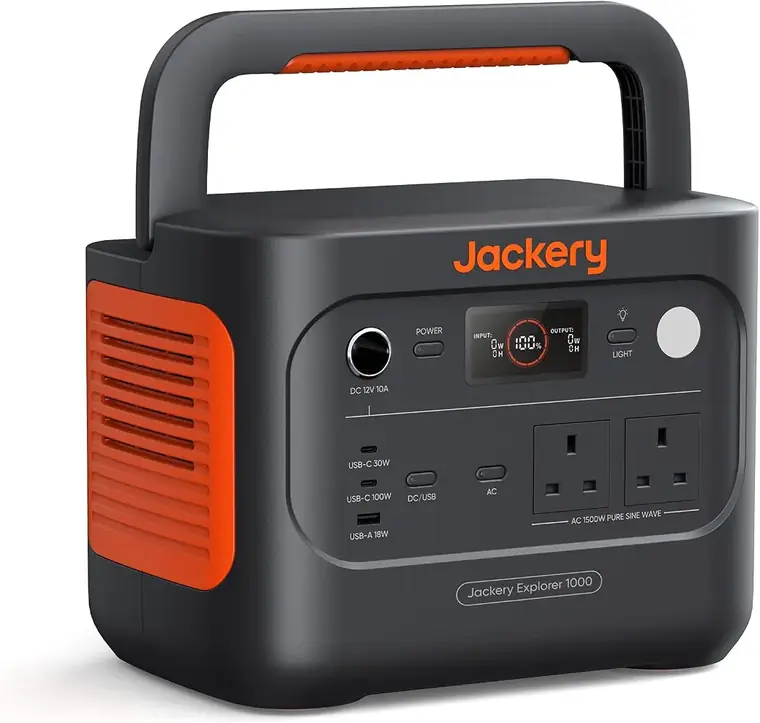 Jackery Explorer 1000 v2 Best Overall |
1070Wh | 10.8kg | Buy → |
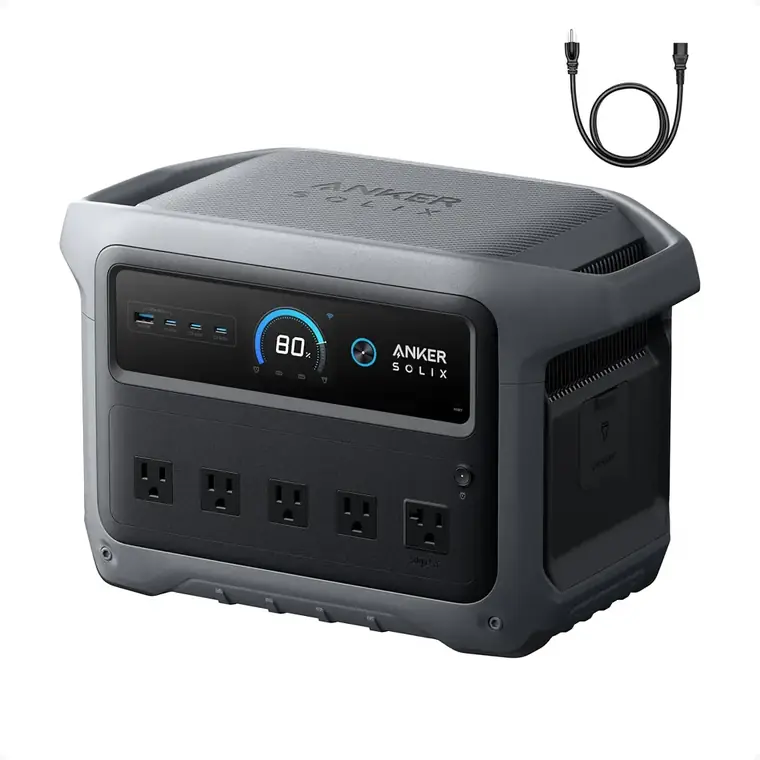 Anker SOLIX C1000 Gen 2 Best-Selling |
1024Wh | 11.3kg | Buy → |
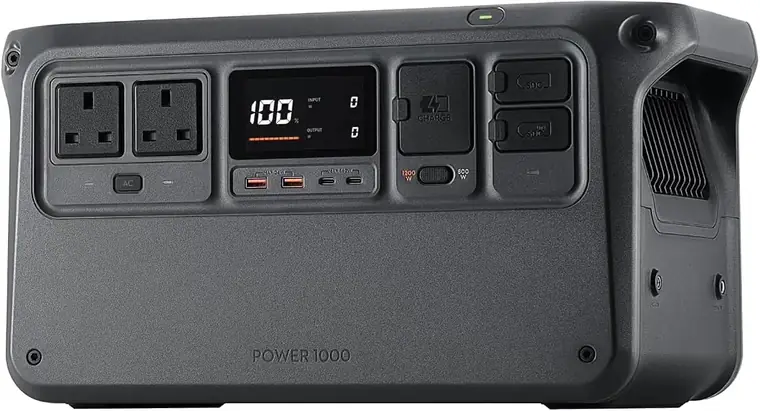 DJI Power 1000 Highest Output |
1024Wh | ~13kg | Buy → |
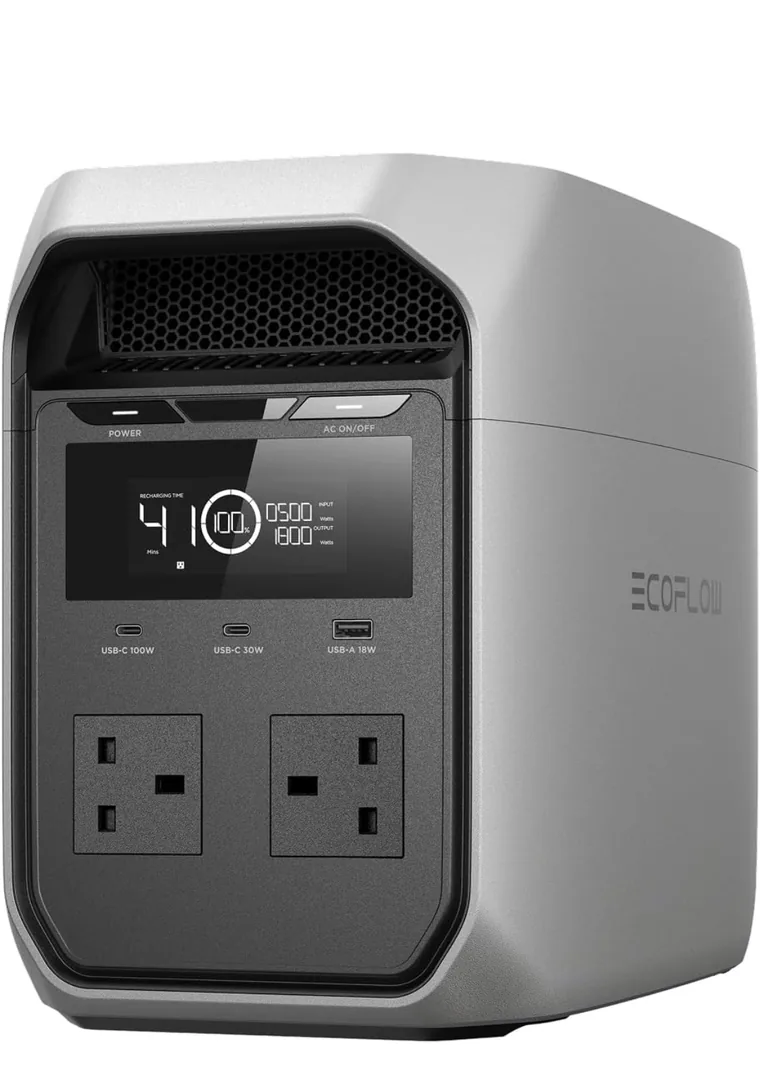 EcoFlow Delta 3 Classic Fastest Charging |
1024Wh | 12.1kg | Buy → |
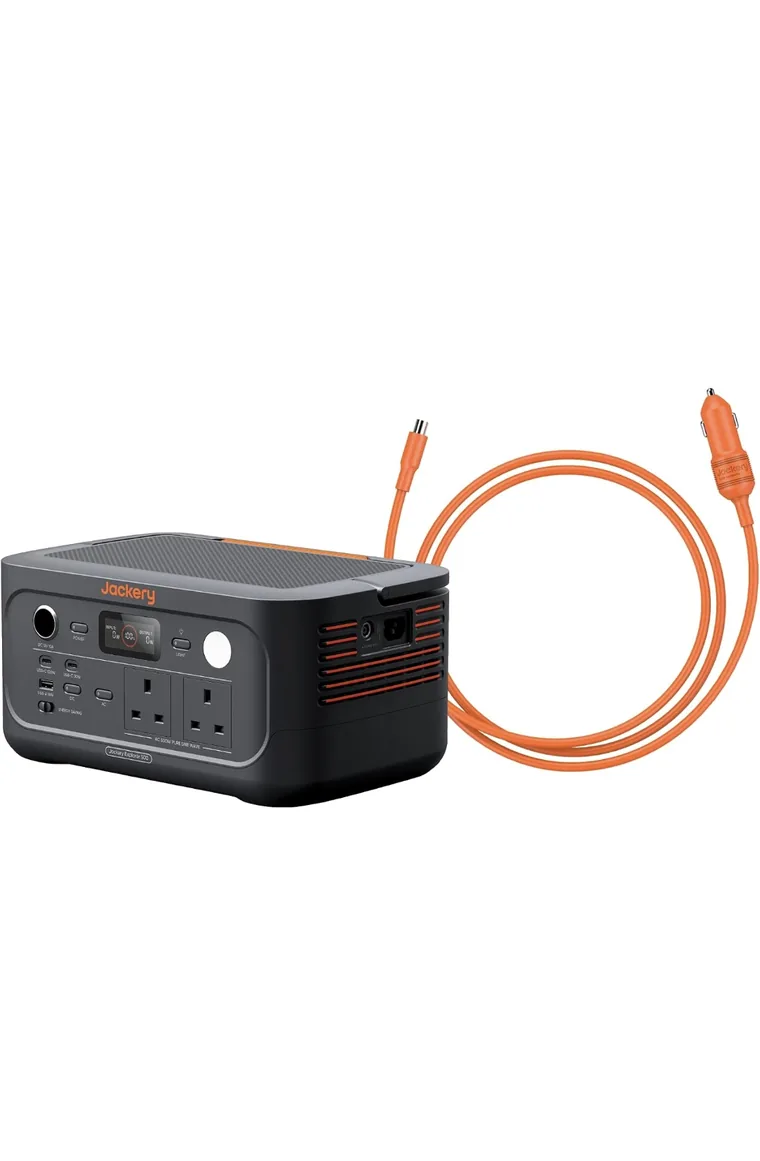 Jackery Explorer 500 v2 Best Lightweight |
512Wh | 6.4kg | Buy → |
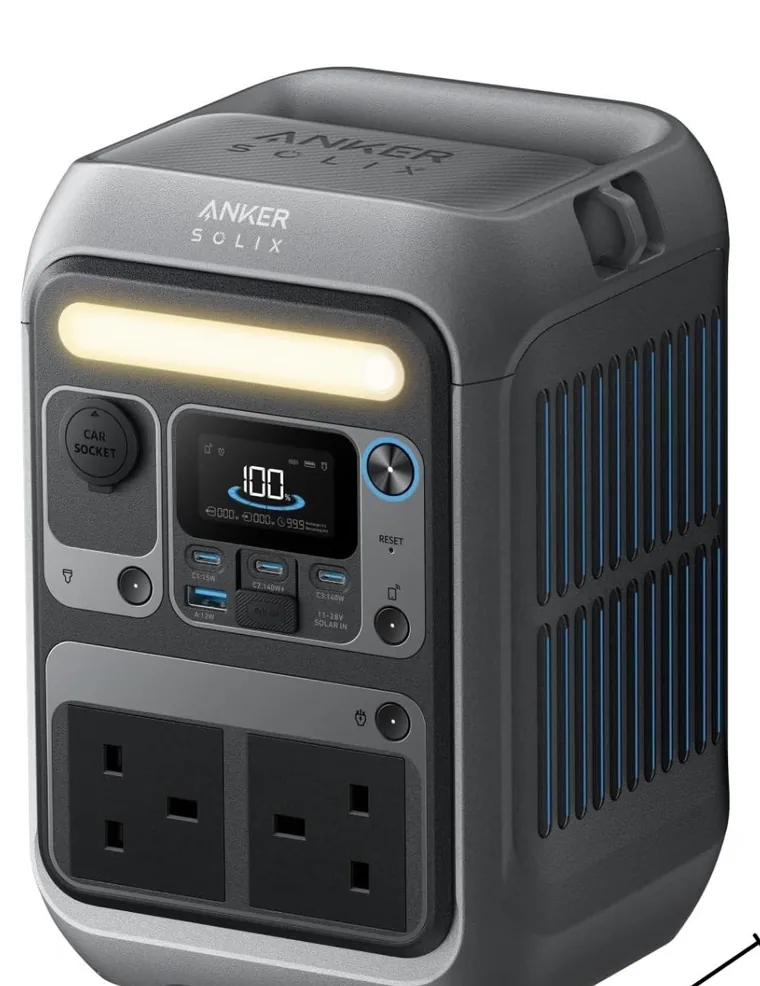 Anker SOLIX C300 Most Portable |
288Wh | ~3.8kg | Buy → |
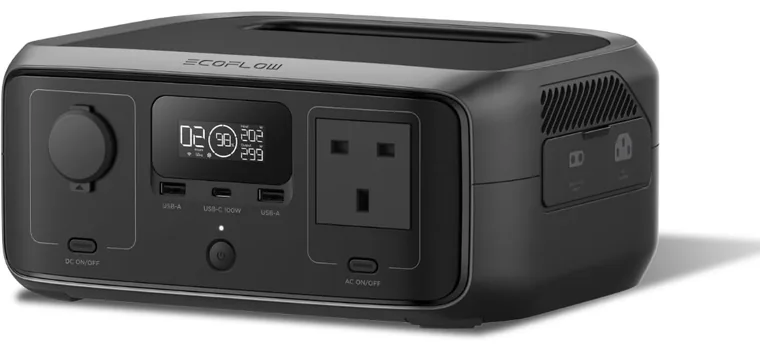 EcoFlow RIVER 3 Best Budget |
245Wh | ~4.6kg | Buy → |
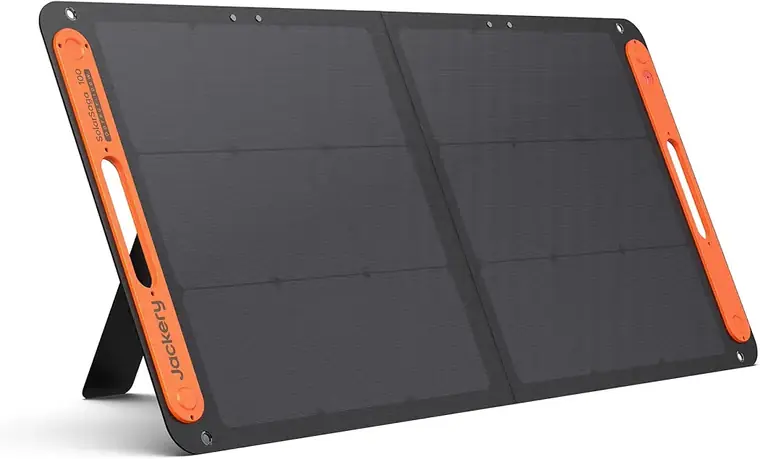 Jackery SolarSaga 100W Solar Companion |
100W panel | ~4.6kg | Buy → |
Jackery Explorer 1000 v2
Best OverallBest for: anyone who wants one do-everything unit and doesn't want to think about it twice.
The v2 is Jackery's mid-range workhorse, and the LiFePO4 cell swap is the headline change — rated for around 4,000 charge cycles versus the older chemistry's 500, so it should genuinely last a decade of regular van use rather than degrading after a season or two. 1500W continuous is enough for a kettle, a small fridge, or a laptop and lighting setup simultaneously, and at 10.8kg it's realistically liftable into a campervan locker solo. Solar input tops out at 200W, which pairs neatly with a single SolarSaga 100W panel.
Pros
- LiFePO4 battery — roughly 4,000-cycle lifespan
- Lightest of the three ~1kWh-class units at 10.8kg
- 1500W covers most single-appliance campervan needs
- Well-established brand with wide UK accessory support
Cons
- Lower peak output than DJI or Anker if running multiple heavy devices at once
- Solar input capped at 200W — slower off-grid recharge than the Anker or EcoFlow
DJI Power 1000
Highest OutputBest for: running two power-hungry things at once — a kettle and a hairdryer, or a fridge and a heater.
DJI's first serious power station leans on the same battery-management expertise it built for drones, and it shows — 2200W continuous output is the highest on this page, enough to run a kettle and a hairdryer at the same time without tripping. The trade-off is weight: at roughly 13kg it's the heaviest here, noticeably more to haul in and out of a van than the Jackery. Recharges to full from the mains in about 70 minutes and stays remarkably quiet at 23dB, which matters more than it sounds like it would when you're parked up overnight.
Pros
- 2200W continuous — highest output in this comparison
- Very quiet operation (23dB) — won't disturb overnight parking
- Fast DJI drone battery charging via SDC port, useful if you already shoot drone footage
Cons
- Heaviest 1kWh-class unit on this page at ~13kg
- Newer to the power station market than Jackery or Anker
Anker SOLIX C1000 Gen 2
Best-SellingBest for: topping up fast at a service station stop, or off-grid via solar faster than anything else here.
The standout feature here is charge speed — Anker's HyperFlash tech takes this from flat to full via a UK mains socket in about 49 minutes, a genuine Guinness World Record for this capacity class. That matters most if you're topping up at a service station stop rather than overnight. It also accepts up to 600W of solar input, more than double the Jackery, so it recharges fastest off-grid too if you pair it with larger panels. The trade-off versus the Gen 1 model is no expansion battery option, so what you buy is the ceiling on capacity.
Pros
- 49-minute full recharge from the mains — fastest in this class
- 600W max solar input — fastest off-grid recharge option here
- 10ms UPS switchover, useful for anything sensitive like a CPAP machine
Cons
- No expansion battery — capacity is fixed at 1024Wh
- Fan can reach ~45dB during UltraFast charging
EcoFlow Delta 3 Classic
Fastest ChargingBest for: quiet campsites — recharges 0-80% in 45 minutes and runs under 30dB, quiet enough for a pitch after dark.
EcoFlow's newest entry-level Delta strips back the expansion-battery complexity of the Plus and Max models and focuses on three things: fast charge, quiet running, and solid output. 45 minutes to 80% is genuinely useful if you're topping up between pitches, and the sub-30dB fan means it won't be the thing that wakes up the campsite. The trade-off for the lower price is that what you buy is the ceiling — no add-on batteries later, unlike the wider Delta 3 range.
Jackery Explorer 500 v2
Best LightweightBest for: solo weekend camping — light enough to carry to a pitch, no van required.
At 6.4kg this is the lightest unit on this page by some margin — comfortably carried in one hand from car boot to tent. 512Wh covers phones, lights, a laptop and a speaker for a full weekend without needing a top-up, and the LiFePO4 cell is rated for a genuine 10-year lifespan. The 500W ceiling means it won't run a fridge compressor or a kettle, so it's a camping companion rather than a campervan's main power source.
Anker SOLIX C300
Most PortableBest for: festivals and short hikes — small enough to fit in a rucksack, still runs a phone, speaker and lights all weekend.
This is the one to pack when you're not driving right up to the pitch. At under 4kg it's the most genuinely portable unit here, with 140W two-way fast charging that tops it back up quickly once you're back near a socket. 288Wh and a 300W ceiling are modest — this isn't for a fridge or a kettle — but for a weekend of phones, lights and a speaker it does exactly the job it's built for.
EcoFlow RIVER 3
Best BudgetBest for: a first power station, or a backup kept in the van you don't need to think about.
The cheapest genuinely capable option on this page. 245Wh won't run much beyond phones, lights, and a laptop, but the GaN-based electronics keep it compact and the sub-20ms UPS switchover is a nice touch if you ever use it as a router backup at home too. A sensible entry point if you're not sure yet how much power station you actually need.
Jackery SolarSaga 100W Solar Panel
Solar CompanionBest for: going off-grid for more than a weekend — the accessory that makes any of the above self-sufficient.
Not a power station itself — this is the accessory that lets any of the Jackery units above actually go off-grid for more than a weekend. Folds in half for storage, weighs about the same as a small daypack, and is IP-rated for splash resistance so a surprise shower mid-pitch won't kill it. On a genuinely sunny UK day expect somewhere in the 60-80W range rather than the full 100W rating — normal for any folding panel, not a fault. Pairs directly with Jackery power stations; other brands typically need their own matched panel or an adapter cable.
Power Stations FAQ
Common QuestionsHow much power station capacity do I actually need for a campervan trip?
For a weekend charging phones, running LED lighting, and topping up a laptop, something in the 300-500Wh range is plenty. The 1000Wh-class units on this page are aimed at longer stays or running a small fridge, a fan heater briefly, or power tools — genuinely "living off it" rather than just topping up devices. If you're unsure, work out your daily Wh usage (device wattage × hours used) and aim for at least double that in battery capacity, since you rarely want to run a battery down to empty.
Can I run a campervan fridge off one of these all night?
Usually yes, with headroom to spare. Most 12V campervan compressor fridges draw somewhere between 40-60W. Even the smallest unit here (1024Wh) could theoretically run a 50W fridge for roughly 20 hours before empty, though real-world figures are always a bit lower once you account for inverter losses. Running lighting and charging phones alongside the fridge will eat into that, so it's worth keeping an eye on total draw rather than just the fridge.
What's the difference between the Wh rating and the W rating?
Wh (watt-hours) is the size of the battery — how much energy it can store in total. W (watts) is the output — how much power it can deliver at any one moment. A 1000Wh battery with a 1500W output can run a 1500W kettle, but only for about 40 minutes before it's empty; the same battery running a 15W light could last over 60 hours. Both numbers matter, but for different reasons — capacity for how long, output for what you can actually plug in.
Do I need a separate solar panel, or can I just charge from the mains?
If you're mostly camping at sites with hookup, mains charging is simpler and faster on all three units here. A solar panel matters if you're wild camping, staying off-grid for several days, or just want a backup that doesn't rely on finding a socket. It's not an either/or — most people charge from the mains before a trip and treat solar as a top-up while parked up, not the primary charging method.
Setting up your driveaway awning too? Check our campervan awning and essentials guide for the full kit list.
Camping & Awnings — Full comparison of driveaway awnings, camping essentials and more.
Camping Tools — Multi-tools, knives and headtorches compared.
Beginners Guide — First steps for new campers and hikers.
Campervan Wild Camping UK — What's actually legal, nation by nation.
Get Our Free UK Campervan Packing Checklist
Six categories, nothing left in the driveway — plus new gear reviews when we publish them. No spam, unsubscribe any time.